TL;DR:
An 11.25x19.25x2 air filter measures 11.25 x 19.25 x 1.75 inches. The face numbers are exact, and only the 2 is rounded: filters sold as 2-inch are built 1.75 inches deep so they slide into a 2-inch slot. Reorder the same fractional size instead of rounding up to 12x20x2.
From the attic: On our insulation jobs, the filter door is one of the first things I open, and the 11.25x19.25x2 is a size homeowners often misorder: they measure 11.25, assume the label was rounded down, and order a 12x20.
Key Takeaways
• An 11.25x19.25x2 filter measures 11.25 x 19.25 x 1.75 inches. Filterbuy lists it at that actual size in MERV 8, 11, and 13.
• Whole-number sizes such as 20x25x2 are rounded up and actually measure about 19.5 x 24.5 x 1.75.
• Rounding 11.25x19.25 up to 12x20 orders a filter that usually won't fit the same slot.
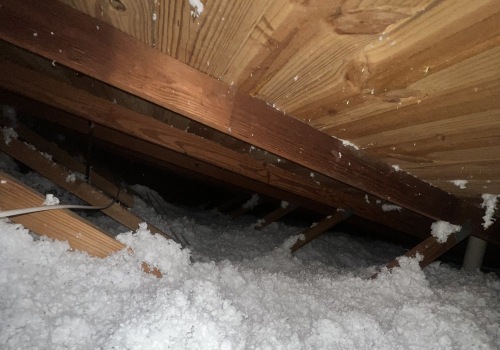
• Attic insulation work is a good time to check the filter, since blown insulation stirs up fine dust that a loose filter lets through.
What Is the Difference Between Nominal and Actual Air Filter Size?
Nominal size is the rounded name printed on a filter's frame, and actual size is what the filter measures. On whole-number sizes, the filter usually runs a quarter to a half inch smaller than the label on length and width, according to HVAC.com's guide to common air filter sizes. Depth is undersized too: a 1-inch filter is about 0.75 inch deep and a 2-inch filter is 1.75 inches.
The undercut is deliberate: a filter cut to the exact size of its slot would jam or bow. Here is how common 2-inch sizes compare:
• 11.25x19.25x2 measures 11.25 x 19.25 x 1.75 inches. The face is exact, and only the depth is rounded.
• 12x20x2 measures 11.5 x 19.5 x 1.75 inches. Both the face and the depth are rounded.
• 16x25x2 measures 15.5 x 24.5 x 1.75 inches. Both the face and the depth are rounded.
• 20x25x2 measures 19.5 x 24.5 x 1.75 inches. Both the face and the depth are rounded.
Whole-number sizes above follow Filterbuy's published half-inch cut; other brands vary slightly.
Why Is an 11.25x19.25x2 Filter Only 1.75 Inches Deep?
The "2" describes the slot depth, not the filter's thickness. Filters sold as 2-inch are typically built 1.75 inches deep so they fit a 2-inch rack without forcing.
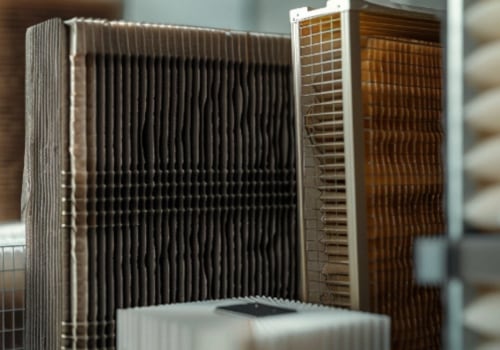
American air filter manufacturer based in Talladega, Alabama, that makes HVAC and furnace filters in more than 600 sizes, including the 11.25x19.25x2, which measures 11.25 x 19.25 x 1.75 inches and comes in MERV 8, 11, and 13. 11.25x19.25x2 filter listing shows that actual size next to the nominal one, so you can confirm what will arrive.
Why Don't Fractional Filter Sizes Get Rounded?
Fractional sizes exist because some slots don't match a whole-number filter, so rounding the label would defeat the purpose. That's why a 12x20x2, which actually measures 11.5 x 19.5, may buckle in a rack built for an 11.25x19.25, while an 11x19 leaves gaps for unfiltered air.
The EPA's Guide to Air Cleaners in the Home sets the test: a filter should fit snugly so air can't leak around it, without being bent or crushed. Odd sizes usually come from how the rack was framed, which is also why older air handlers still take a 15x25x1 filter.
Our Rule of Thumb: Fractions Are Real, Whole Numbers Are Rounded
1. Whole number on the label (20x25x2): expect about half an inch less on length and width.
2. Fraction on the label (11.25x19.25x2): the face numbers are real. Order that exact size.
3. Any 2-inch label: expect a 1.75-inch-deep filter.
Filterbuy, which manufactures every filter it sells, cuts standard sizes half an inch under nominal and custom fractional sizes to the exact numbers ordered. As its sizing guide puts it, "That half-inch is a decision, not an accident." Actual sizes also vary by brand: Filterbuy's 20x25x1 measures 19.50 x 24.50 inches and Filtrete's 19.68 x 24.68. Once a filter seats flat, stick with that listing.

How Do You Measure an Air Filter Slot Correctly?
If your old filter reads 11.25x19.25x2 and fit snugly, reorder that size. Measure only if the label is missing or the fit was poor. To locate the rack, see how to find the AC air filter in your house.
1. Turn the system off at the thermostat.
2. Note the airflow arrow so the new filter faces the same way.
3. Measure length, width, and depth to the nearest 1/8 inch.
If the old filter was warped or loose, measure the slot opening instead.
4. Compare your numbers with the listing's actual size, not just its nominal name.
5. Slide the new filter in and check all four edges for gaps or bowing.

No Label? Match Your Empty Slot to the Right Filter
HVAC.com recommends 1/8 to 5/8 inch of clearance between filter and slot. Applied to the two sizes people mix up most, that rule works out like this:
• Slot under 11 5/8 x 19 5/8 inches: only the 11.25x19.25x2 fits. A 12x20x2 would leave less than 1/8 inch and may bind.
• Slot from 11 5/8 to 11 7/8 by 19 5/8 to 19 7/8 inches: either size fits the clearance range, so order what the original label said.
• Slot over 11 7/8 x 19 7/8 inches: a 12x20x2 fits. An 11.25x19.25x2 would leave more than 5/8 inch for air to slip past.
These ranges are our calculation from HVAC.com's guidance. If your slot lands on a borderline, call an HVAC technician rather than forcing a filter.
What Are the Signs Your Filter Is the Wrong Size?
Watch for these signs at the filter door:
• Rattling or shifting at startup: likely too small (HVAC.com).
• Bent corners or a forced fit: too big (HVAC.com).
• Banging at startup or collapsed pleats: replace it now (U.S. DOE Building America Solution Center).
• Gray, crusted insulation under the return: long-term air bypass.
If you spot any of these, re-measure before you reorder.
Why Does Filter Fit Matter During Attic Insulation Work?
A filter that fits catches the fine dust insulation crews stir up, while a loose one lets it reach the blower and coil. The DOE notes that much of the U.S. housing industry puts HVAC systems in attics, so the air handler often sits right where crews blow in fiberglass or cellulose insulation.
Before the project:
• Ask the crew to keep the filter door and air handler panels clear of insulation.
• Keep a correctly sized spare to swap in once the dust settles.
• Check the filter a week or two after the job.
Which MERV Rating Should You Choose for an 11.25x19.25x2?
MERV 13 is the EPA's recommended baseline if your system fan and filter slot can handle it. Filterbuy sells this size in MERV 8, 11, and 13, labeled Standard, Superior, and Optimal.
• MERV 8 captures at least 70% of 3 to 10 micron particles and 20% of 1 to 3 micron particles. It suits everyday dust control and older blowers.
• MERV 11 captures at least 85% of 3 to 10 micron, 65% of 1 to 3 micron and 20% of 0.3 to 1 micron particles. It suits homes with pets or seasonal allergies.
• MERV 13 captures at least 90% of 3 to 10 micron, 85% of 1 to 3 micron and 50% of 0.3 to 1 micron particles. It suits smoke and fine particles.
Higher-MERV filters can clog faster, the DOE notes. If airflow drops after insulation work, ask an HVAC technician whether MERV 11 suits your blower better.
"Before a crew blows in a single bag, I pull the filter and look at the insulation under the return. A gray, crusted patch there means air has been slipping around the filter for years, and the wrong size is usually why."
Essential Resources on “11.25x19.25x2 Air Filters”
1. Order the Exact 11.25 x 19.25 x 1.75 Size the First Time
Source: 11.25x19.25x2 Air Filters . Best for: confirming actual size and MERV options.
The listing shows the actual 11.25 x 19.25 x 1.75 size beside the nominal name, in MERV 8, 11, and 13.
2. Confirm What a Correct Fit Looks Like
Source: Guide to Air Cleaners in the Home (U.S. EPA). Best for: fit and replacement timing.
The EPA says a filter should fit snugly without bending and notes that manufacturers typically recommend replacement every 60 to 90 days.
3. Measure Your Slot Without Guesswork
Source: What Are the Most Common Air Filter Sizes? (HVAC.com). Best for: measuring and reading labels.
HVAC.com explains that a filter should be 1/8 to 5/8 inch smaller than its slot, and its warning signs of rattling and bent corners make a quick fit check.
4. Stop Rounding Odd Sizes the Wrong Way
Source: Why Older Air Handlers Still Take a 15x25x1 Air Filter. Best for: homes with non-standard filter sizes.
Odd sizes trace back to a rack framed around the equipment cabinet, so matching the size beats cutting the rack.
5. Pick a MERV Rating Backed by Federal Data
Source: What Is a MERV Rating? (U.S. EPA). Best for: choosing between MERV 8, 11, and 13.
The EPA lists minimum capture efficiency by particle size for every MERV rating from 1 to 16, based on the ASHRAE test method.
6. Protect Your Blower From Excess Airflow Resistance
Source: High-MERV Filters (U.S. DOE Building America Solution Center). Best for: older or attic air handlers.
The DOE's example rates a 2-inch MERV 7 filter at 0.13 in. w.c. versus 0.20 for a 1-inch at the same airflow.
7. Seal Your Attic Filter Door Against Dust and Leaks
Source: Proper Installation of Furnace and Air-Handler Filters (U.S. DOE Building America Solution Center). Best for: insulation projects near the air handler.
The DOE calls for a gasketed filter access panel, since a leaky cover pulls in unconditioned air.
Supporting Statistics
1. You Spend About 90% of Your Time Indoors
• The U.S. EPA reports that most people spend about 90% of their time indoors, mostly at home.
• Takeaway: A gap-free fit protects the air you breathe most.
2. Your Filter Uses 20% to 50% of Your System's Airflow Budget
• The U.S. DOE Building America Solution Center reports that filters cause 20% to 50% of total system pressure drop, and most homes run best at 0.4 to 0.5 in. w.c. or less.
• Takeaway: A forced or wrong-depth filter strains your blower.
3. Attic Ducts Add 10% to Heating and Cooling Energy
• The U.S. Department of Energy reports that ducts in vented attics raise heating and cooling energy use by 10%, and duct leakage often tops 20% of conditioned airflow.
• Takeaway: A loose filter or leaky filter door adds to that loss.
Final Thoughts
The 11.25x19.25x2 label tells the truth about the face and rounds only the depth. Reorder that exact size and confirm the 1.75-inch depth on the listing, and your filter will keep insulation dust out of the system.
Next Steps
1. Read the size on your current filter and confirm it with a tape measure.
2. Write "11.25x19.25x2, actual 11.25 x 19.25 x 1.75" on the air handler cabinet in permanent marker.
3. Choose MERV 8, 11, or 13 using the guide above.

Frequently Asked Questions
What do the numbers in 11.25x19.25x2 mean?
The first two numbers are the face dimensions, 11.25 by 19.25 inches, and the third is the nominal depth. Brands differ on which face number they call length or width, so match both to your slot.
Is an 11.25x19.25x1.75 filter the same as an 11.25x19.25x2?
Yes. 11.25x19.25x1.75 is the actual size of the filter sold as 11.25x19.25x2. Order by the nominal name, then confirm the 1.75-inch depth on the listing.
Why is my air filter smaller than the label?
Labels show rounded nominal sizes, and filters are built slightly undersized so they slide in without bending.
Can I put a 1-inch filter in a 2-inch slot?
It will slide in but won't fit well. A 1-inch filter is about 0.75 inch deep, so it can shift in a 2-inch rack and let air slip around it.
How often should I change an 11.25x19.25x2 filter?
Filterbuy's guidance for this size is every 90 days, every 2 months with pets, and every 6 weeks if someone has asthma or allergies. Check it sooner after attic insulation work.
Plan Your Attic Project With Clean Air in Mind
Planning insulation work around an attic air handler? Request a free attic assessment, and we'll check filter access and fit before the crew starts.
Glossary
Nominal size: The rounded size printed on a filter's frame and used to order it.
Actual size: The filter's true measured dimensions, usually slightly smaller than nominal.
Air bypass: Air that flows around a poorly fitted filter instead of through it.
MERV rating: Minimum Efficiency Reporting Value, a 1-to-16 scale for how well a filter captures particles between 0.3 and 10 microns.
Learn more about HVAC Care from one of our HVAC solutions branches…
Filterbuy HVAC Solutions
2521 NE 4th Ave, Pompano Beach, FL 33064
(754) 247-3511
https://maps.app.goo.gl/JmWkEXya7uzuLzBh8